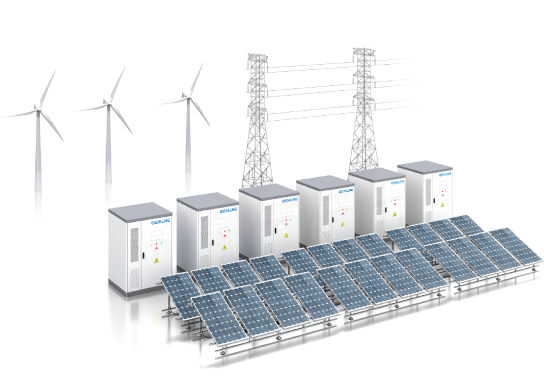
Expanding operations across multiple locations often leads to fragmented energy strategies, where each site operates independently with limited coordination. Over time, this lack of alignment creates inefficiencies in procurement, utilization, and cost control. An integrated energy management platform helps unify these distributed assets, enabling organizations to manage energy as a portfolio rather than as isolated systems. WHES supports this transition by providing digital tools that connect on-site resources into a cohesive operational framework.
Data Integration as the Foundation for Portfolio Management
The first challenge in multi-site optimization lies in consolidating data from different facilities, each with its own equipment and consumption patterns. Energy management systems address this by standardizing data collection and enabling consistent reporting across locations. With a reliable data layer, an energy management platform can identify performance gaps, compare site efficiency, and support more informed decision-making. WHES OS enables this level of integration by aggregating real-time data from distributed energy assets into a unified interface.
Cross-Site Strategy and Resource Allocation
Once visibility is established, optimization shifts toward how energy resources are allocated across the portfolio. Energy management systems allow operators to coordinate storage usage, adjust load distribution, and align energy consumption with pricing signals across different sites. An effective energy management platform ensures that decisions are not made in isolation but reflect broader operational priorities. WHES supports this approach by enabling centralized control strategies that improve consistency while still accommodating site-specific requirements.
Platform-Driven Optimization and Scalable Control
At a portfolio level, the ability to scale and adapt becomes essential. A robust energy management platform must support growing asset networks without increasing operational complexity. Through advanced analytics and automated control, energy management systems can continuously refine performance and respond to changing conditions. WHES delivers these capabilities through its platform architecture, allowing organizations to optimize multi-site energy operations while maintaining flexibility for future expansion.
