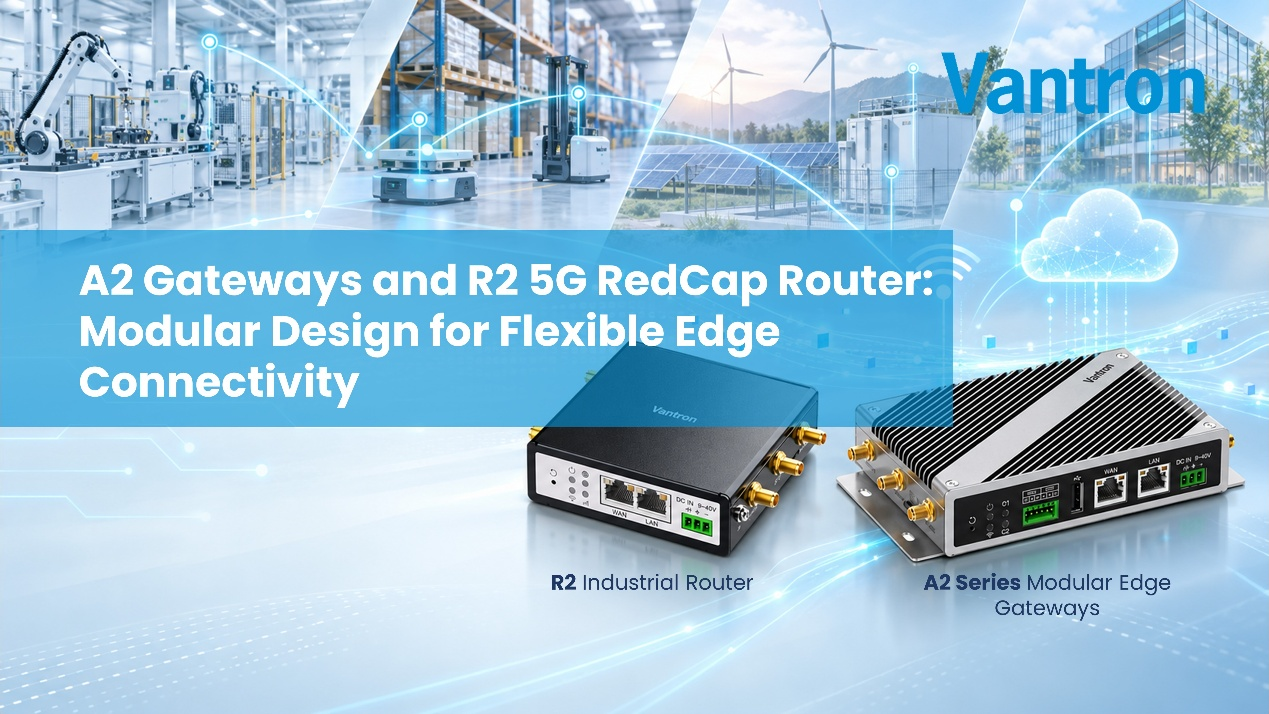
Industrial communication gateways connect machines, sensors, controllers, and business systems that may use different networks or data formats. They help industrial teams collect information from existing equipment without replacing every device. Choosing the right gateway requires more than checking a protocol list: engineers must also consider data flow, site conditions, security, and long-term maintenance.
What an Industrial Communication Gateway Does
A gateway sits between two or more parts of an industrial system and manages how information moves between them. It may bridge serial and Ethernet networks, convert supported protocols, filter data, or forward readings to supervisory software. The actual functions depend on the hardware, firmware, and configuration.
For example, a facility may have energy meters connected over RS-485, PLCs on Ethernet, and a monitoring application in a central control room. A suitable gateway can collect selected values and provide them to the application in a usable format. This approach can extend the value of installed equipment while reducing one-off integration work.
Choose Protocols According to the Data Path
Modbus for Field Devices
Modbus RTU is commonly used over serial links such as RS-485, while Modbus TCP carries Modbus messages over TCP/IP networks. It is often found in meters, PLCs, drives, and other control devices. When evaluating an edge IoT gateway, confirm the required Modbus variant, client/server role, register mapping, serial settings, and supported concurrent connections. Protocol support alone does not guarantee that every device can be integrated without configuration.
OPC UA for System Interoperability
OPC UA is designed to support structured, platform-independent information exchange across industrial systems. It can help applications interpret data from equipment supplied by different vendors, especially when information models and security settings are planned consistently. Buyers should verify whether OPC UA is supported natively, requires additional software, or must be handled by an upstream application.
MQTT for Upstream Messaging
MQTT uses a publish/subscribe model that is useful for sending selected data to brokers and IoT applications. A gateway may publish readings, alarms, or aggregated values instead of sending every raw sample continuously. Teams should define topic names, message structure, quality-of-service needs, authentication, and what happens when the network connection drops.
Where Gateways Add Practical Value
In manufacturing, a gateway can combine machine status, cycle counts, and process measurements for production dashboards. In energy management, it may collect meter readings and equipment alarms from distributed systems. In building automation, it can help link HVAC controls, environmental sensors, and supervisory applications. The specific benefit depends on choosing data that supports a real operating decision.
Remote assets introduce additional needs. Pumps, charging stations, energy storage systems, or outdoor cabinets may require cellular connectivity where wired networks are unavailable. Check carrier coverage, antenna placement, data costs, and failover behavior at the installation site rather than assuming wireless access will be stable everywhere.
Decide What Should Run at the Edge
Some gateways mainly pass data between networks. Others have computing resources for local filtering, aggregation, protocol translation, buffering, or application logic. Local processing may reduce bandwidth use and allow selected checks to continue during upstream interruptions, provided the device supports the required behavior.
For a system that needs both field connectivity and local data handling, compare the actual processing capacity, storage, operating system, development options, and software support. The phrase gateway edge computing describes a broad design approach, not a guarantee that every gateway can run a particular application. Vantron’s official gateway portfolio includes options with industrial protocol connectivity, MQTT data transfer, local processing, and remote management, depending on the model. Confirm performance with the intended workload and update rate.
Plan Installation Before Procurement
Start with a device inventory. Record each device’s physical interface, protocol variant, data points, polling interval, and communication role. Document scaling, units, byte order, and timestamps so data remains consistent as it moves to another system. Test representative devices and expected exception conditions before deploying across a whole line or site.
Physical requirements can narrow the options quickly. Check input voltage, operating temperature, mounting method, port count, isolation, and resistance to vibration or electrical noise. A cabinet installation may prioritize compact mounting and serial connectivity, while a remote site may need cellular networking and a wider operating temperature range.
Security and Ongoing Support
Gateways connect operational equipment to other networks, so security must be part of the design. Segment operational technology where appropriate, restrict services and accounts, protect credentials, and establish a controlled update process. Remote access should follow the site’s approved security policies, with logs and clear ownership for incident handling.
Maintenance also affects total cost. Review documentation, drivers, SDKs, diagnostic tools, software updates, remote troubleshooting, and product availability over the expected service period. A low purchase price may not compensate for lengthy integration or difficult field support. In multi-site deployments, consistent configurations and centralized device management can reduce repetitive work when the selected hardware and platform support those functions.
Turning Connectivity into an Operating Improvement
A gateway project should start with a measurable goal: reduce manual meter collection, improve fault visibility, or make selected machine data available to a maintenance system. Pilot the complete data path, compare gateway readings with source devices, and test behavior during network interruptions before expanding the design.
Match the required interfaces, protocols, environmental ratings, security features, and software resources to the application, then review relevant solutions through Vantron. A requirements-led selection creates a more maintainable foundation for industrial data integration.
