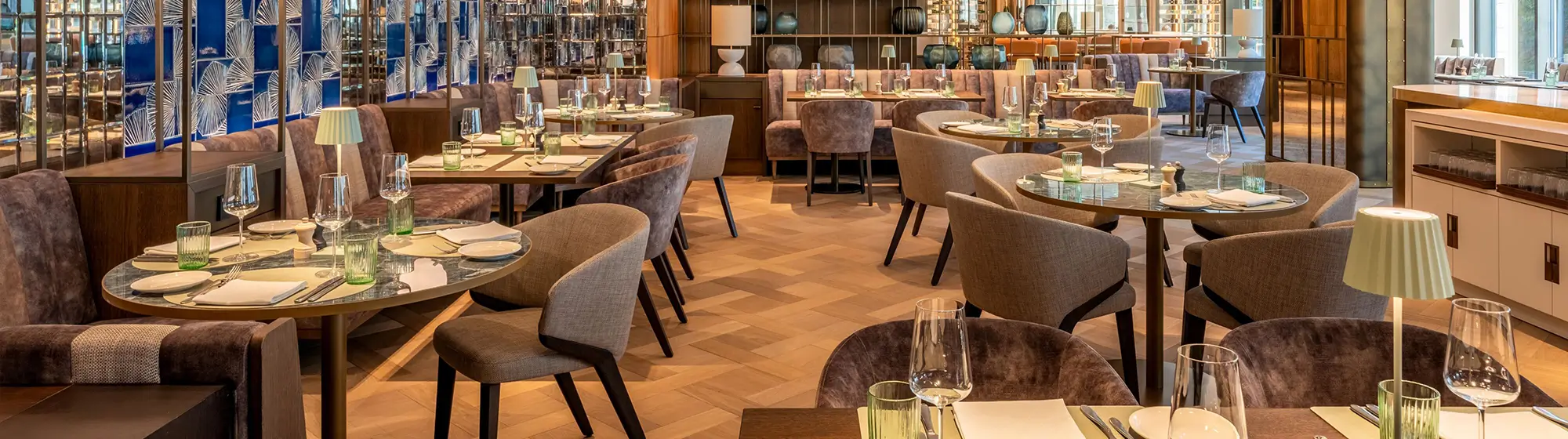
Dining spaces play a significant role in shaping how guests experience a hotel. Beyond food quality and service, seating comfort, table arrangements, and interior atmosphere influence how long visitors stay and how they perceive the establishment.
Well-planned hotel dining room furniture should reflect the restaurant’s concept while accommodating different dining habits, group sizes, and operational demands. A successful layout balances visual appeal with practical considerations, allowing the dining environment to function smoothly throughout different service periods.
Matching Furniture Styles with Different Dining Concepts
Every dining concept has its own spatial and functional requirements. A casual restaurant may benefit from flexible tables, lightweight chairs, and informal seating arrangements that accommodate families and small groups. Fine-dining establishments generally favor more spacious layouts, upholstered seating, and refined finishes that contribute to a quieter atmosphere. The furniture selection should communicate the restaurant’s identity without compromising everyday usability.
Buffet restaurants present another set of considerations. Guests frequently move between serving stations and their tables, making circulation space particularly important. Tables should accommodate plates, drinks, and personal belongings without obstructing nearby pathways. Durable chairs and easy-to-clean surfaces are also valuable because buffet areas experience frequent guest turnover and regular cleaning.
For hotel properties with multiple dining venues, consistency does not necessarily mean identical furniture throughout the building. Each restaurant can maintain a distinct character through different materials, colors, and seating styles. However, shared design elements, such as coordinated finishes or complementary proportions, can help connect individual spaces to the hotel’s broader interior concept.
Evaluating Space, Seating Capacity and Guest Comfort
Dining capacity should be calculated alongside the movement requirements of guests and restaurant staff. Filling every available square meter with tables may increase theoretical seating numbers, but insufficient clearance can make service inconvenient. Designers need to account for chair movement, server access, accessible routes, and the distance between dining tables.
Table dimensions should correspond to the intended dining experience. Smaller tables work well for couples and quick meals, while larger configurations accommodate families and business groups. Modular tables offer additional flexibility because individual units can be combined during busy periods and separated when smaller parties arrive. This approach helps restaurants respond to changing occupancy without extensive layout adjustments.
Comfort also depends on the relationship between table height, seat height, and chair design. Inconsistent proportions can make meals uncomfortable, particularly during longer dining sessions. Backrest support, seat depth, cushioning, and foot clearance deserve attention during furniture evaluation. These details are especially relevant to hotel restaurant furniture, where guests may use the dining area for breakfast, business meetings, and extended social gatherings.
Selecting Materials for Hygiene and Long-Term Performance
Restaurant furniture encounters frequent contact with food, beverages, cleaning products, and personal belongings. Surface materials should be assessed according to their resistance to stains, moisture, scratches, and repeated cleaning. Finishes that retain their appearance after routine maintenance can help reduce refurbishment costs and preserve the restaurant’s visual consistency.
Environmental considerations are equally relevant to hospitality procurement. CARB P2 and E0/E1 standards relate to formaldehyde emissions, while REACH addresses the management of chemical substances. Hotels operating across international markets may need to evaluate applicable requirements before specifying furniture materials. Products with appropriate compliance documentation can support healthier indoor environments and more responsible purchasing decisions.
Maintenance procedures should influence material selection from the beginning. Fabric upholstery may contribute warmth and acoustic comfort, but its suitability depends on stain resistance and cleaning requirements. Smooth, non-porous surfaces are often easier to wipe down, while metal components can provide structural stability in frequently used seating. The right material combination depends on the restaurant’s service model, maintenance resources, and expected usage intensity.
Coordinating Furniture Procurement with Operational Needs
Procurement decisions involve more than appearance and unit price. Restaurant operators should review construction details, load-bearing capacity, production consistency, and warranty conditions before approving large orders. Sample inspections can reveal differences in color, texture, dimensions, and finishing quality that may not be obvious in product photographs.
BFP Furniture incorporates environmental compliance and manufacturing inspections into its hospitality furniture approach. Its stated standards include CARB P2, E0/E1, and REACH, while factory testing covers load-bearing performance, durability, wear resistance, and environmental factors. Depending on the furniture category, warranty coverage ranges from two to five years, giving hotel purchasing teams a defined reference when evaluating after-sales support.
Project scheduling deserves similar attention. Furniture production, international transportation, installation, and room inspections can all affect a restaurant’s opening timeline. Purchasing teams should confirm product specifications and quantities early, particularly when several dining areas require coordinated deliveries. A detailed acceptance checklist can also help identify defects or dimensional inconsistencies before the furniture enters daily service.
Building a Dining Environment That Supports the Guest Experience
A restaurant’s furniture arrangement influences far more than its appearance. It affects guest circulation, service efficiency, cleaning routines, seating flexibility, and the overall atmosphere of a meal. Careful planning allows hotel dining room furniture to respond to the specific demands of each dining concept rather than relying on visual trends alone.
Successful hospitality projects consider these requirements together, from ergonomic proportions and surface maintenance to environmental standards and manufacturing quality. BFP Furniture provides furniture solutions supported by material compliance assessments, batch inspections, and category-dependent warranty coverage. With a clear understanding of operational priorities, hotels can develop dining spaces where hotel restaurant furniture contributes naturally to guest comfort and the property’s long-term interior strategy.
