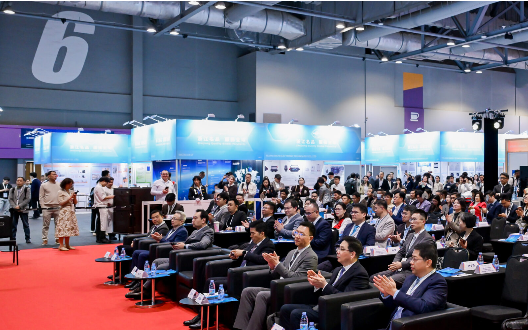
Battery production is becoming increasingly automated as manufacturers pursue higher output, tighter quality control, and greater process consistency. Battery manufacturing equipment now plays an important role across electrode processing, cell assembly, formation, inspection, material handling, and factory data management.
At a modern battery expo, automation is no longer limited to reducing manual labor. Battery manufacturing equipment is increasingly connected with real-time monitoring, defect detection, traceability, and smart factory systems.
Automation Covers More of the Production Process
Battery manufacturing involves several stages that must remain consistent. Variations during coating, welding, formation, assembly, or inspection can affect downstream quality, yield, and production costs.
The Battery Show Asia includes battery manufacturing and supply chain, equipment, testing, and digitalization among its exhibition areas. Its equipment scope covers electrode coating, welding, formation, assembly and packaging equipment, testing and certification, and digital and smart factory technologies.
This broad coverage reflects a shift toward connected production rather than isolated automated machines. Manufacturers increasingly need equipment that can exchange data and operate as part of an integrated line.
Intelligent Equipment Improves Process Visibility
Modern automation combines machinery with sensors, software, data collection, and process controls. The goal is not simply to automate repetitive tasks, but to make production conditions more visible and controllable.
The 2026 conference program included sessions on novel processes and equipment for consistent cell manufacturing, intelligent quality monitoring systems, data-driven quality and traceability, and next-generation battery production.
These topics show how equipment automation is becoming closely linked with quality and manufacturing outcomes.
Real-Time Quality Monitoring Gains Importance
Traditional inspection may identify defects after a process has been completed. Automated inspection and inline measurement can detect deviations while production is still running, giving operators an opportunity to respond earlier.
The Battery Show Asia’s technical discussions include intelligent quality monitoring, inline measurement, defect inspection, and yield improvement. These applications show how automation can connect manufacturing equipment with quality assurance.
In high-volume production, earlier detection can help limit the scale of process deviations and improve manufacturing visibility.
Data and Traceability Become Core Functions
Automated production generates large quantities of process data. When information from machines, inspection systems, and testing equipment is connected, manufacturers can establish clearer production records for cells, modules, and batches.
Traceability can help engineers investigate quality issues and identify relationships between operating conditions and production results. The 2026 technical program included discussion of data-driven quality and traceability, reinforcing the growing role of production intelligence within battery manufacturing.
AI Adds Another Layer of Optimization
Artificial intelligence is gaining attention because modern factories can generate substantial amounts of production data. AI can work alongside sensors, equipment, and software to identify patterns, predict potential issues, and improve process settings.
The Battery Show Asia has also highlighted digital and smart factory technologies within its exhibition scope. This direction suggests that future production systems will increasingly connect physical automation with software-based analysis and decision support.
Manufacturers evaluating new equipment may therefore need to consider data accessibility, communication interfaces, software compatibility, and integration with factory management systems.
Automation Must Deliver Consistent Results
Automation is valuable only when it produces repeatable results. Equipment evaluation should therefore consider accuracy, process stability, integration, maintenance, and reliability.
A machine that performs well as an independent unit may still require engineering work before it can connect with a complete production line. Interfaces between coating, assembly, formation, inspection, and factory-management systems should be considered during project planning.
This becomes especially important when production moves from pilot scale to mass production, where small variations can have larger financial consequences.
What Buyers Can Learn at a Battery Expo
A specialized battery expo allows manufacturers to compare technologies across different production stages. Engineering teams can review coating, welding, formation, assembly, inspection, testing, and digitalization within one professional environment.
The Battery Show Asia 2026 brought together more than 200 exhibitors showcasing over 1,000 technologies and products across batteries, energy storage, power systems, charging infrastructure, and new-energy mobility.
This concentration gives buyers opportunities to compare suppliers and discuss technical requirements directly with equipment providers.
Supplier Evaluation Goes Beyond Machine Specifications
Purchasing teams increasingly need to assess more than speed, capacity, or individual machine functions. Customization, integration, software, testing, service capabilities, project experience, and production support can all influence equipment selection.
The Battery Show Asia connects manufacturing equipment with testing, certification, digitalization, and battery supply-chain technologies. Its exhibition categories specifically include equipment, testing, and digitalization.
This broader perspective can help buyers evaluate equipment as part of a complete production strategy rather than as an isolated machine purchase.
The Battery Show Asia Reflects the Automation Trend
The Battery Show Asia brings together battery development, manufacturing, equipment, testing, digitalization, and recycling within a single industry platform. This enables visitors to examine production technologies alongside materials, battery systems, and downstream applications.
The 2027 edition will take place from July 14–16 at AsiaWorld-Expo in Hong Kong. The organizer expects more than 25,000 qualified professionals and buyers and 350+ exhibitors from major international markets.
This matters as battery factories scale across regions. Equipment that combines automation with accurate data collection can help manufacturers maintain consistent processes across multiple lines and sites. Standardized interfaces may also make future upgrades easier when production requirements change or new battery formats are introduced.
Toward Smarter Battery Production Lines
Battery manufacturing automation is moving toward greater connectivity, real-time monitoring, traceability, and data-driven optimization. The direction is not simply toward more automated machines, but toward production systems in which equipment, inspection, software, and process data work together.
The future of battery manufacturing equipment will therefore be measured by more than individual machine performance. Integration capability, data intelligence, quality control, and adaptability are becoming increasingly important as factories move toward smarter and more scalable production.
The Battery Show Asia provides a professional environment for manufacturers and equipment suppliers to compare technologies and monitor these production trends.
