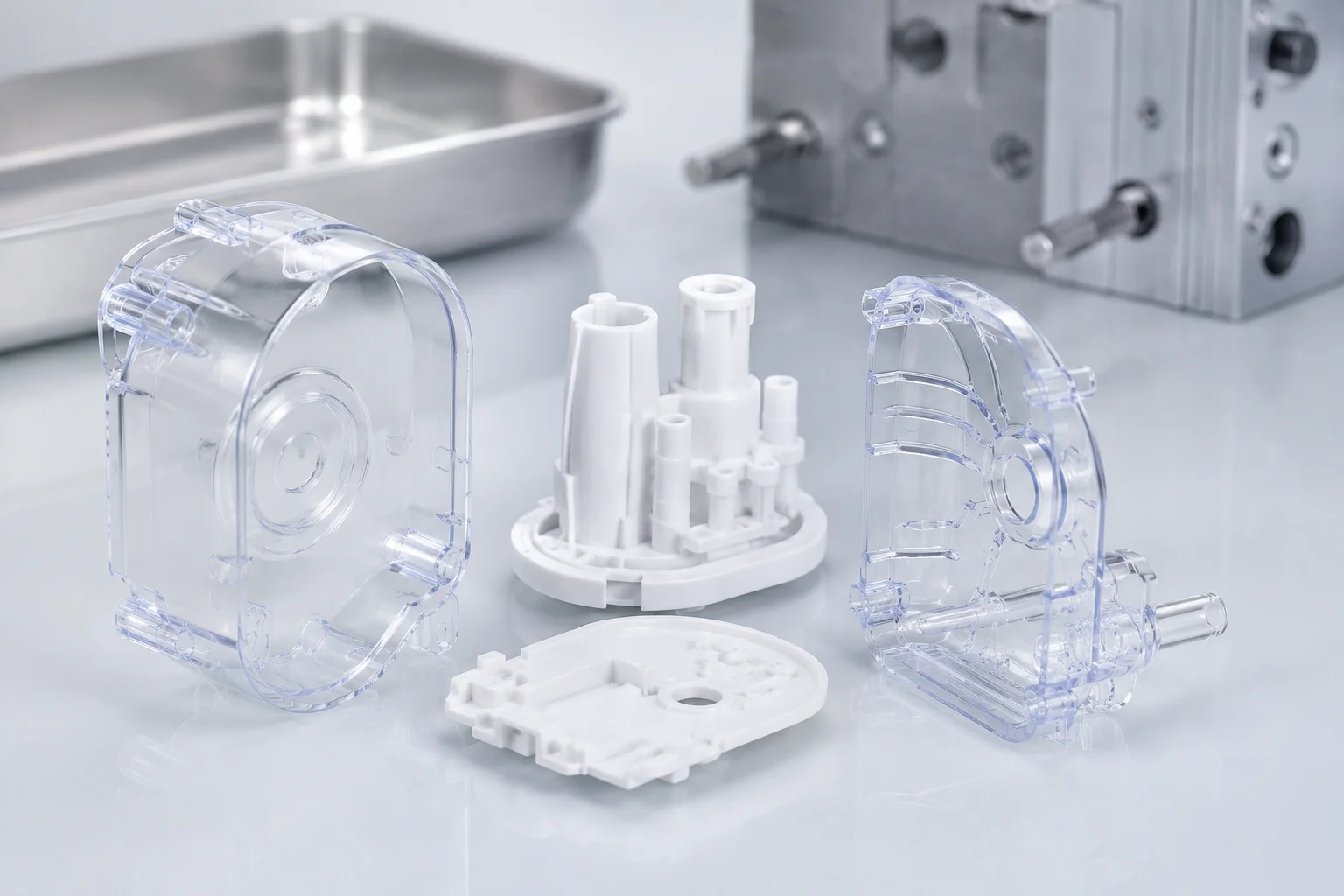
A plastic part can look simple on a CAD screen, yet turning that design into a reliable production component requires careful decisions about materials, tooling, tolerances, surface finish, and manufacturing volume. The challenge becomes greater when a project moves quickly from an initial prototype to market validation and then into repeat production.
Custom injection molding services provide a practical way to manage this transition through one connected manufacturing process. Instead of treating prototyping, low-volume production, and repeat orders as separate projects, manufacturers can develop tooling and processes around the product’s expected lifecycle.
At HordRT, custom plastic injection molding is supported from DFM analysis and tooling development through mold trials, production molding, inspection, and repeat manufacturing. With rapid tooling and no minimum order quantity, the process can accommodate projects at different stages without forcing unnecessary production commitments.
Start With the Right Tooling Strategy
The mold is one of the most important investments in an injection molding project. Choosing the tooling approach too early or without considering future production volume can increase cost and create unnecessary changes later.
For early-stage products, rapid tooling can provide a faster path from CAD data to molded parts. HordRT offers typical rapid tooling lead times of around 10 to 15 days after design approval, although complex geometry, multi-cavity molds, special steels, and demanding cosmetic requirements may require additional time.
Before tooling begins, DFM analysis helps identify manufacturing risks related to wall thickness, draft angles, ribs, bosses, parting lines, and undercuts. Addressing these details during design review can reduce tooling modifications and improve the stability of subsequent molding runs.
This approach is particularly useful when a product is still being validated. Instead of investing heavily in production tooling before demand is confirmed, the tooling strategy can be matched to the expected development stage and volume.
Prototype Parts With Production-Grade Materials
A prototype should do more than demonstrate the general shape of a product. For functional validation, the molded part should represent the expected production material and manufacturing conditions as closely as possible.
Injection molding allows teams to evaluate form, fit, function, assembly, surface appearance, and material performance using production-grade resins. This can reveal issues that may not appear in 3D-printed or machined prototypes.
HordRT supports a broad range of injection molding materials, including ABS, PP, PE, HDPE, PS, PC, PA, POM, PBT, PPA, TPE, TPU, TPV, silicone, reinforced grades, and selected medical materials. Material selection can be evaluated according to mechanical strength, operating temperature, chemical exposure, appearance, regulatory requirements, and cost.
This material-focused approach helps connect prototype validation with later production requirements rather than creating a gap between development parts and final molded components.
Move Into Bridge Production Without Starting Over
Once a prototype has passed functional and design validation, the next challenge is often production volume. Demand may not yet justify a large tooling investment, but the product may need more parts for field testing, customer evaluation, pilot programs, or an initial market launch.
This is where bridge production becomes valuable.
With custom injection molding services that support flexible quantities, manufacturers can continue using an established tooling and process strategy while increasing output. HordRT supports prototype, bridge, and repeat production without a fixed MOQ, allowing tooling and manufacturing decisions to be aligned with actual demand.
The benefit is not simply producing fewer parts. It is maintaining continuity between development and production. Design changes, material decisions, dimensional requirements, and surface specifications can be carried forward instead of being recreated for every manufacturing stage.
Scale to Repeat Production With Process Control
When a product reaches regular demand, consistency becomes as important as speed. A molded component must maintain its dimensions, appearance, assembly features, and functional characteristics across production runs.
HordRT’s injection molding workflow includes material checks, first-article inspection, documented process control, and final inspection. Depending on project requirements, inspection can also include CMM measurement and blue-light scanning.
The manufacturing process itself follows controlled stages from mold installation and material preparation to injection, holding, cooling, ejection, and inspection. Managing these variables systematically helps establish a repeatable production process rather than relying on individual production runs.
For projects with strict cleanliness requirements, HordRT also operates a 720 m² ISO Class 8 cleanroom and supports medical and other cleanliness-sensitive plastic components.
Why HordRT for Custom Injection Molding Services?
The value of an injection molding partner is not limited to machine capacity. Engineering support, tooling flexibility, material selection, quality control, and production continuity can all affect the total manufacturing experience.
HordRT brings these elements together through an integrated process covering DFM analysis, rapid tooling, injection molding, inspection, and repeat production. Its no-MOQ model supports projects ranging from initial prototypes to larger production programs, while rapid tooling can shorten the path from approved design to molded parts.
For projects requiring more than conventional molding, HordRT also provides insert molding, overmolding, gas-assisted injection molding, and other manufacturing processes. This gives engineers additional options when a component requires integrated metal inserts, soft-touch materials, reduced weight, or more complex functional structures.
One Molding Strategy for the Product Lifecycle
Successful injection molding is not simply about making a plastic part. It is about creating a manufacturing path that remains practical as the product develops.
From prototype tooling and production-grade material validation to bridge production and repeat manufacturing, custom injection molding services can provide continuity across changing volumes and requirements.
HordRT combines rapid tooling, no MOQ production, DFM engineering, material selection, quality inspection, and scalable manufacturing to support this progression. For teams looking to move from CAD files to validated prototypes and eventually to repeatable molded parts, a connected molding strategy can reduce unnecessary transitions and keep manufacturing decisions aligned with the product’s next stage.
