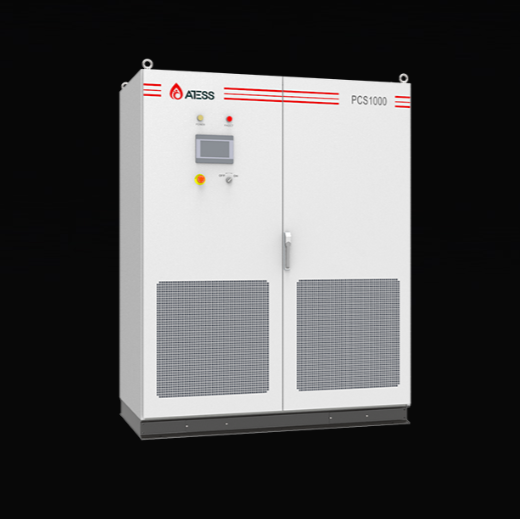
Properly sizing a Power Conversion System for a battery energy storage system (BESS) requires a systematic evaluation of load profiles, battery compatibility, and future scalability. A correctly specified battery inverter ensures that the system delivers expected performance without underutilization or costly overhauls. Atess approaches each BESS project with this engineering-first perspective.
Analyze Load Requirements and Backup Duration
The first step in sizing any Power Conversion System is to define the target load and required backup duration. For continuous load support, the battery inverter must supply enough power to cover peak demand, while the battery bank determines how long that load can be sustained. Atess offers a clear starting point: their battery inverter product line covers a power range from 100kW to 1500kW, specifically designed for industrial, commercial, and grid-level storage scenarios. Engineers should match the Power Conversion System rating to the facility’s peak load, not the average load, to avoid overloading.
Match Battery Voltage and Chemistry to Inverter Specifications
Every Power Conversion System has defined DC voltage windows that must align with the battery bank’s operating range. Professionals recommend checking that the battery inverter supports the intended chemistry—typically LFP for commercial BESS—and that the voltage stays within the inverter’s acceptable limits. The Power Conversion System cannot function effectively if the battery voltage falls outside its input range. Atess designs its battery inverter to accommodate various battery configurations, making it suitable for AC-coupled systems that require flexible voltage handling.
Plan for Parallel Expansion and Future Demand
Industrial BESS installations often grow over time. Selecting a Power Conversion System that allows parallel connection simplifies capacity expansion. Atess notes that its battery inverter can operate in parallel with up to eight units in off-grid mode, providing up to 12MW power capacity for larger energy demands. On-grid configurations can support even more paralleled units without a fixed upper limit. The Power Conversion System should be selected with headroom for future load increases, avoiding the need for a complete replacement later.
Sizing a Power Conversion System for BESS begins with a thorough load analysis, followed by careful matching of voltage and chemistry between the battery inverter and battery bank, and finally accounts for parallel scalability. Atess provides battery inverters from 100kW to 1500kW that support both off-grid and on-grid parallel configurations, giving engineers a reliable foundation for accurate system sizing.
