In patient monitoring systems, temperature plays a vital role in assessing a patient’s condition. For critical care, anesthesia support, and surgical monitoring, accurate temperature readings are essential. Achieving stability in sensor readings means managing issues such as drift and hysteresis, two factors that can introduce error over time or with changing conditions. For healthcare providers relying on precise data, selecting the right components, like patient monitoring accessories, is an important part of the solution.
Understanding Drift and Hysteresis in Temperature Sensors
Drift refers to a sensor’s gradual deviation from its true value over time. Even a small change can influence clinical decisions, especially when temperature trends guide treatment adjustments. Drift arises from material aging, environmental changes, and repeated use.
Hysteresis occurs when a sensor does not return to its original output after being exposed to a range of temperatures. This lag effect means that readings during warming and cooling phases may differ at the same temperature point, affecting consistency.
Both effects can be reduced by choosing temperature probes made with stable materials, rigorous calibration protocols, and designs that resist degradation. In a clinical setting, where patient comfort and safety are priorities, these characteristics make a measurable difference.
The Importance of Quality Patient Monitoring Accessories
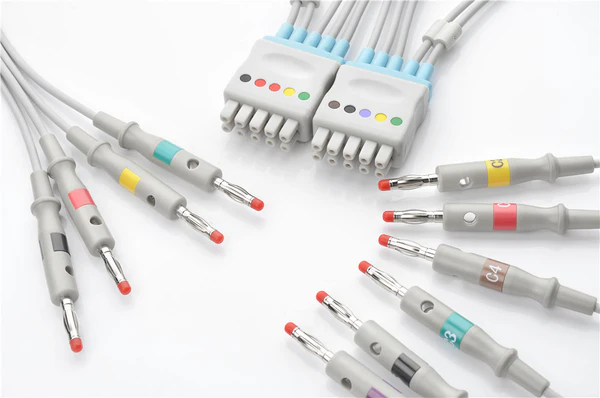
Unimed Medical Supplies Inc. is a medical cable manufacturer and supplier of patient monitoring accessories, including temperature probes compatible with a wide range of patient monitors. Unimed’s offerings encompass ECG cables, SpO₂ sensors, NIBP cuffs, and temperature probes that are designed for integration with common monitoring systems. These accessories are part of the overall ecosystem that ensures reliable vital sign capture and transmission.
Temperature probes from such suppliers are built to provide accurate thermal readings with minimal fluctuation. Proper sensor design helps reduce the effects of drift and hysteresis, ensuring that readings remain consistent throughout a measurement session. This is especially important in long-term care, pediatric monitoring, and perioperative environments where repeated or continuous measurements are necessary.
Conclusion
Minimizing drift and hysteresis in temperature sensors is essential for maintaining confidence in patient data. Integrating well-designed temperature probes and other patient monitoring accessories enhances measurement stability. For healthcare facilities seeking dependable components, products from reputable medical cable manufacturers like Unimed can contribute to more consistent, accurate temperature monitoring, supporting clinical decision-making and patient outcomes.
